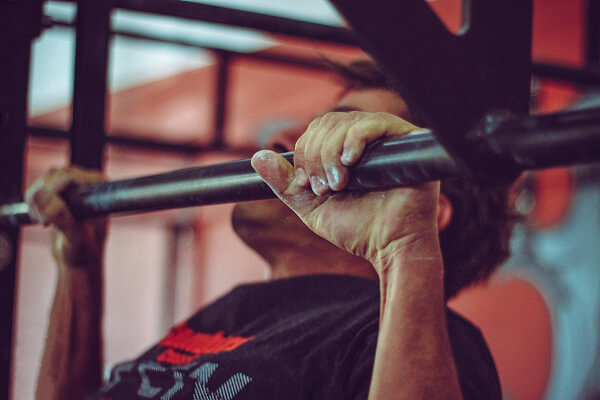
In the pursuit of overall strength and fitness, grip strength is often the unsung hero, frequently overlooked yet profoundly impactful. More than just the ability to crush a handshake, robust hand and forearm strength is a critical determinant of performance in almost every lifting exercise, a potent indicator of general health, and a vital component in injury prevention. Ignoring your grip is akin to building a magnificent house on a shaky foundation; eventually, the weak link will compromise the entire structure.
Think about it: from picking up groceries to opening a stubborn jar, our hands are constantly engaged. In the gym, grip strength is the direct link between you and the weight. Without it, your deadlift plateaus, your pull-ups dwindle, and even your bicep curls suffer because your forearms fatigue before your primary muscles. Exercises like rows, farmer's carries, and even the bench press indirectly rely on a strong, stable grip.
Beyond performance, research increasingly points to grip strength as a reliable biomarker for overall health and longevity. Studies have linked greater grip strength to:
Reduced Risk of All-Cause Mortality: A stronger grip often correlates with a lower risk of premature death.
Better Cardiovascular Health: It's associated with healthier hearts and blood vessels.
Improved Cognitive Function: Some research suggests a connection to better brain health in later life.
Enhanced Bone Density: The mechanical stress on bones in the hands and forearms contributes to their strength.
For athletes, strong grip minimizes the need for aids like straps, allowing for a more natural and integrated strength development. For the everyday individual, it means greater independence and capability in daily tasks.
Grip strength is not a singular entity but rather a complex interplay of different types:
Crushing Grip: The force exerted when squeezing something, like crushing a soda can or gripping a barbell.
Pinch Grip: The ability to hold an object between the thumb and fingers, such as holding a plate by its edge.
Supporting Grip (Static Hold): The capacity to hang from a bar or carry heavy objects for an extended period, relying on sustained isometric contraction.
Each type relies on a different activation pattern of the numerous muscles in the forearm, hand, and fingers.
Improving grip strength doesn't require complex, esoteric equipment. Many effective strategies can be integrated into your existing routine:
Direct Grip Work:
Farmer's Carries: Walk for distance or time with heavy dumbbells or kettlebells. This is a phenomenal all-around grip builder.
Plate Pinches: Hold two or more weight plates together with your fingers and thumb, walking for distance or time.
Dead Hangs: Simply hang from a pull-up bar for as long as possible, aiming to increase duration over time.
Integrate "Thick Bar" Training: Using fat grips or wrapping a towel around barbells and dumbbells increases the diameter, forcing your hands and forearms to work harder to maintain a hold.
Minimize Reliance on Straps: While lifting straps have their place for maximal lifts (like deadlifts that would otherwise be limited by grip), overuse prevents your grip from developing naturally. Consciously train without them for most of your working sets.
Isometric Holds: At the top of movements like deadlifts or rows, hold the weight for an extra 5-10 seconds before lowering.
Reverse Curls/Wrist Curls: These target the forearm flexors and extensors directly, complementing other grip exercises.
By prioritizing this often-neglected aspect of strength, you'll not only unlock new levels in your lifting performance and reduce the risk of common forearm and elbow injuries, but you'll also invest in a valuable facet of your long-term health and functional capacity. A strong grip isn't just a gym boast; it's a testament to overall resilience.
Our premium fitness content is currently unavailable for your connection in your current location.
See supported regions and mobile carriers for more information or when we plan to expand our service. Cost may apply.
Good news: You can still enjoy our trial content while we work on expanding!